BIBLICAL
ARCHAEOLOGY
Place Scripture beside the material record. Examine what was discovered, what it corroborates, where the evidence is limited, and which sources document the case.
Corroboration is not exaggeration
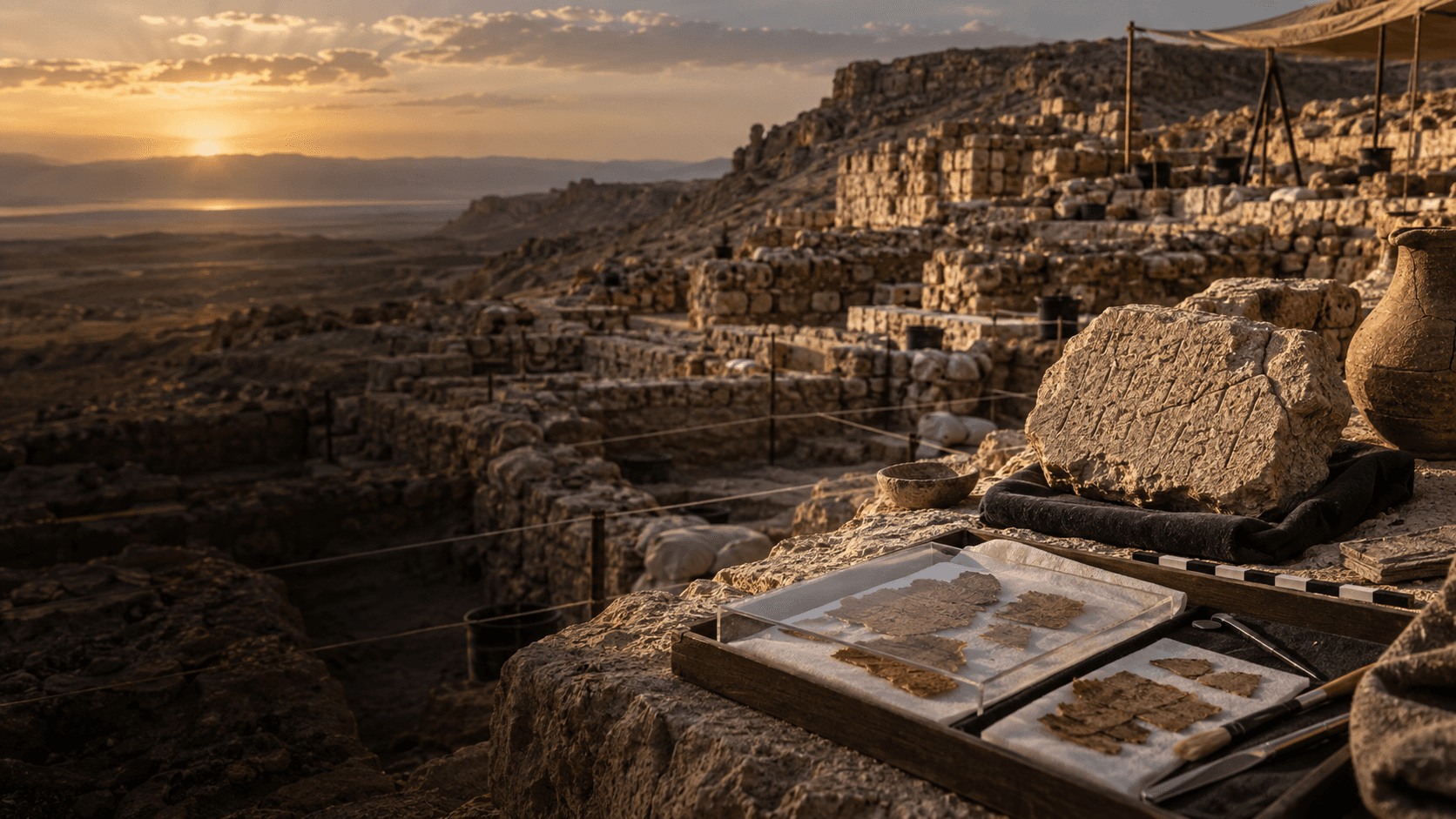
Archaeology can test whether biblical writers describe a recognizable historical world. Inscriptions preserve names and titles. Manuscripts show how texts were copied. Excavated cities, monuments, and artifacts illuminate rulers, conflicts, worship, and daily life.
The order weighs directness to biblical people, events, places, or texts; authenticity and archaeological context; scholarly consensus; and historical or textual importance. A lower-ranked find may still be valuable, especially when it illuminates everyday life or a debated question.
No artifact can prove every theological claim, and the absence of a discovery is not automatically disproof. Each file therefore separates the physical evidence, its biblical connection, and the limits of the conclusion.
Explore the evidence by question
New to biblical archaeology? Begin with a guided path through the library, then open the individual dossiers to examine the evidence, Scripture connections, sources, and limits.
25 Archaeological Discoveries Connected to the Bible
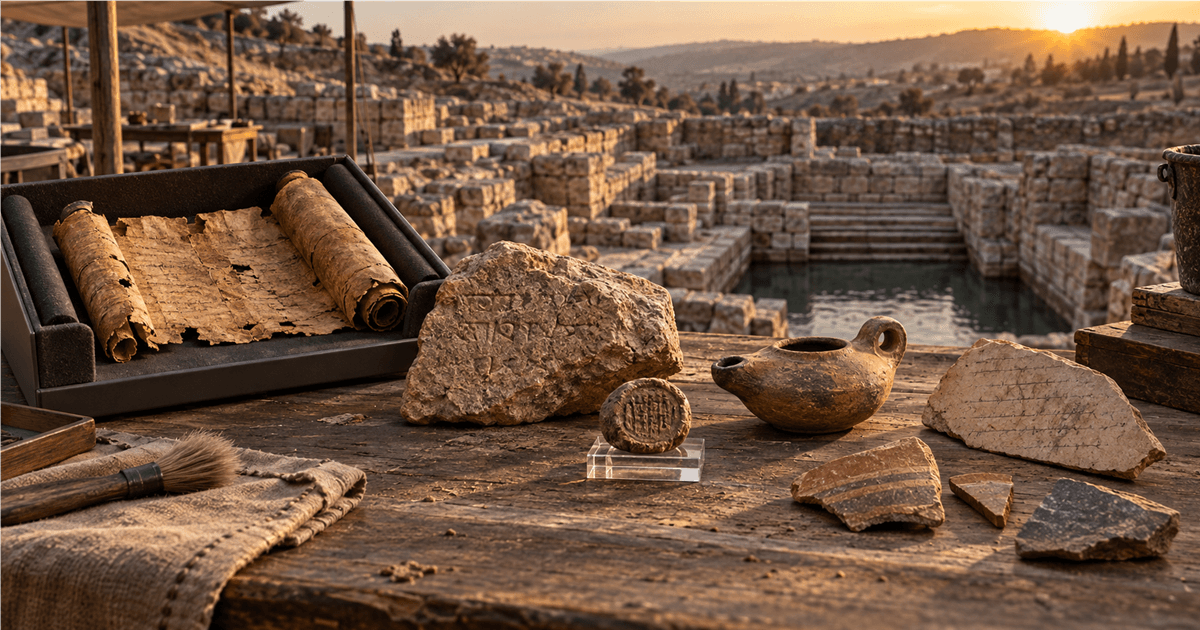
Begin with 25 manuscripts, inscriptions, artifacts, and excavated places that illuminate the people, texts, kingdoms, and settings described in Scripture.
Open the guide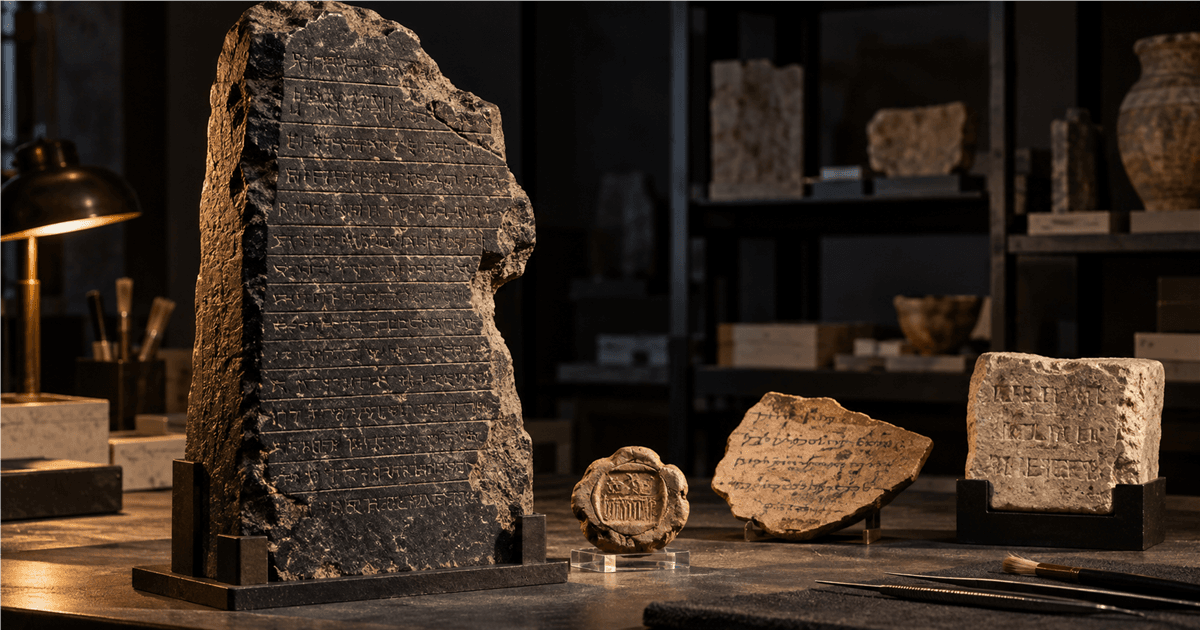
Biblical People Named in Ancient Inscriptions
Examine inscriptions and administrative texts that name people, dynasties, or offices connected to the biblical record—and distinguish direct identification from cautious or disputed association.
Open the guide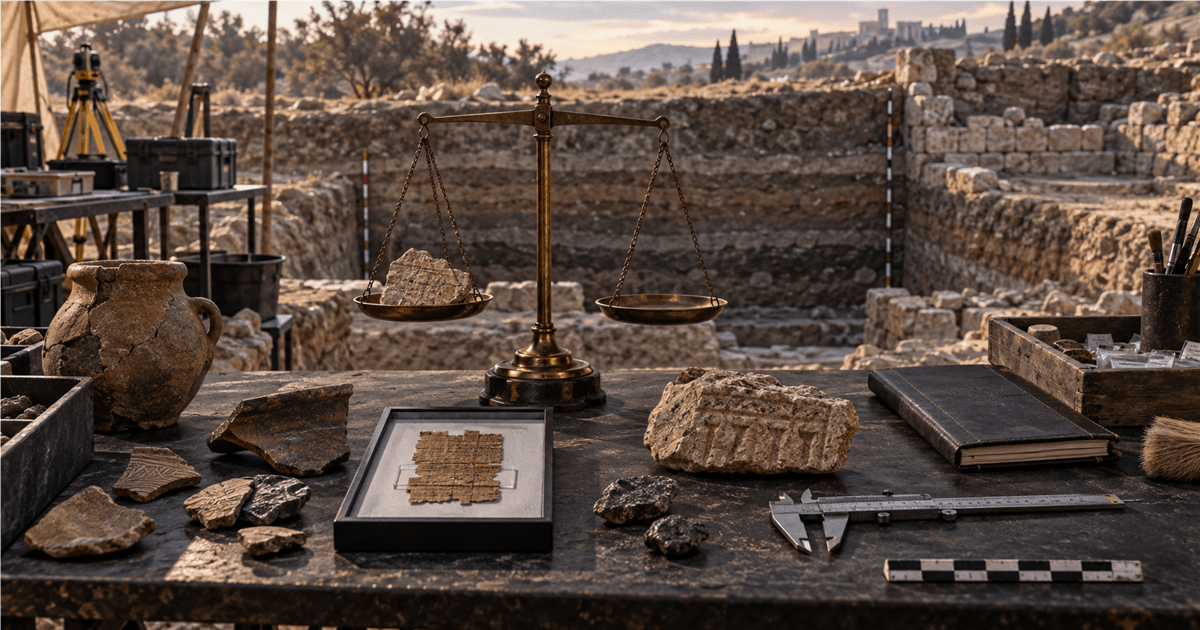
What Archaeology Can—and Cannot—Prove About the Bible
Learn how Watchman 33 evaluates direct attestation, manuscripts, historical context, and disputed associations without asking artifacts to prove more than they can establish.
Open the guideDiscoveries connected to Scripture
884 individually researched evidence files, ordered by historical and evidentiary significance
884 evidence files · page 42 of 74
4QExodus-Leviticusᶠ: An Early Torah Scroll
A late third-century BC parchment preserves consecutive portions of Exodus and Leviticus and is among the earliest substantial biblical manuscripts from Qumran.
4QIsaiah Pesherᵃ (4Q161)
A fragmentary commentary quotes Isaiah 10–11 and reads Assyrian invasion and the branch from Jesse within the interpreter's own expected crisis.
4QHosea Pesherᵇ (4Q167)
A Cave 4 commentary preserves and interprets parts of Hosea 5–8 as judgment on groups in the interpreter's Second Temple world.
4QGenesisᵇ (4Q2): Genesis 1–2 and 4–5
Four Cave 4 fragments preserve portions of Genesis 1–2 and 4–5 in a Hebrew scroll copied during the Second Temple period.
4QExodusᵇ (4Q13): Exodus 1–5
Fragments of 4Q13 preserve Exodus 1–5, including a reading of seventy-five persons in Exodus 1:5 also known from the Greek tradition.
4QLeviticus–Numbersᵃ (4Q23): One Torah Scroll Across Two Books
A substantial Cave 4 Torah manuscript preserves material from Leviticus and Numbers, demonstrating that both books occupied one continuous scroll.
4QLeviticusᵇ Fragments (4Q24): Possibly Two Scrolls
Fragments cataloged together as 4Q24 preserve portions of Leviticus, while recent handwriting analysis argues that the group may represent two separate scrolls.
4QDeuteronomyᵇ (4Q29): The Covenant and Song of Moses
A Cave 4 Deuteronomy scroll preserves portions of chapters 29–32, including covenant language and the Song of Moses.
4QSamuelᵇ (4Q52): An Early Witness to 1 Samuel
One of the oldest Samuel manuscripts, 4Q52 preserves portions of 1 Samuel 12–23 and sometimes aligns with the Hebrew Vorlage reflected in the Old Greek.
4QSamuelᶜ (4Q53): From Abigail to Absalom
A Hasmonean-period Samuel scroll preserves portions of 1 Samuel 25 and 2 Samuel 14–15, linking episodes about Abigail, Absalom, and David.
4QIsaiahᵃ (4Q55): Fragments Across Isaiah 1–23
A Cave 4 Isaiah manuscript preserves scattered passages from the opening half of Isaiah, including prophetic oracles from chapters 1–23.
4QIsaiahᶜ (4Q57): A Witness to Isaiah 52–53
Fragments of 4Q57 preserve portions from across Isaiah, notably material from Isaiah 52:10–53:8 in the servant passage.
Find archaeology while you read
Every evidence file is connected to structured Scripture references. Open a related Bible chapter and the archaeology appears beside prophecies, sermons, teachings, and music.