Preterism
The claim that Christ’s second coming, the resurrection, and final judgment were completed in AD 70 contradicts the visible return, bodily resurrection, worldwide judgment, and prophetic sequence still promised in Scripture.
- Primary
- Eschatology
- Referenced
- 18 passages
- Prepared by
- Watchman 33
Begin with Scripture
The verdict
Full or consistent preterism is false. Jesus Christ did not complete His promised second coming in AD 70, the resurrection of the dead is not past, and the final judgment has not already occurred. The destruction of Jerusalem fulfilled Christ’s warning against that city and temple, but it did not exhaust the worldwide signs, bodily resurrection, gathering of the elect, destruction of the beast, and renewal of creation that Scripture joins to the end of the age.
What the doctrine claims
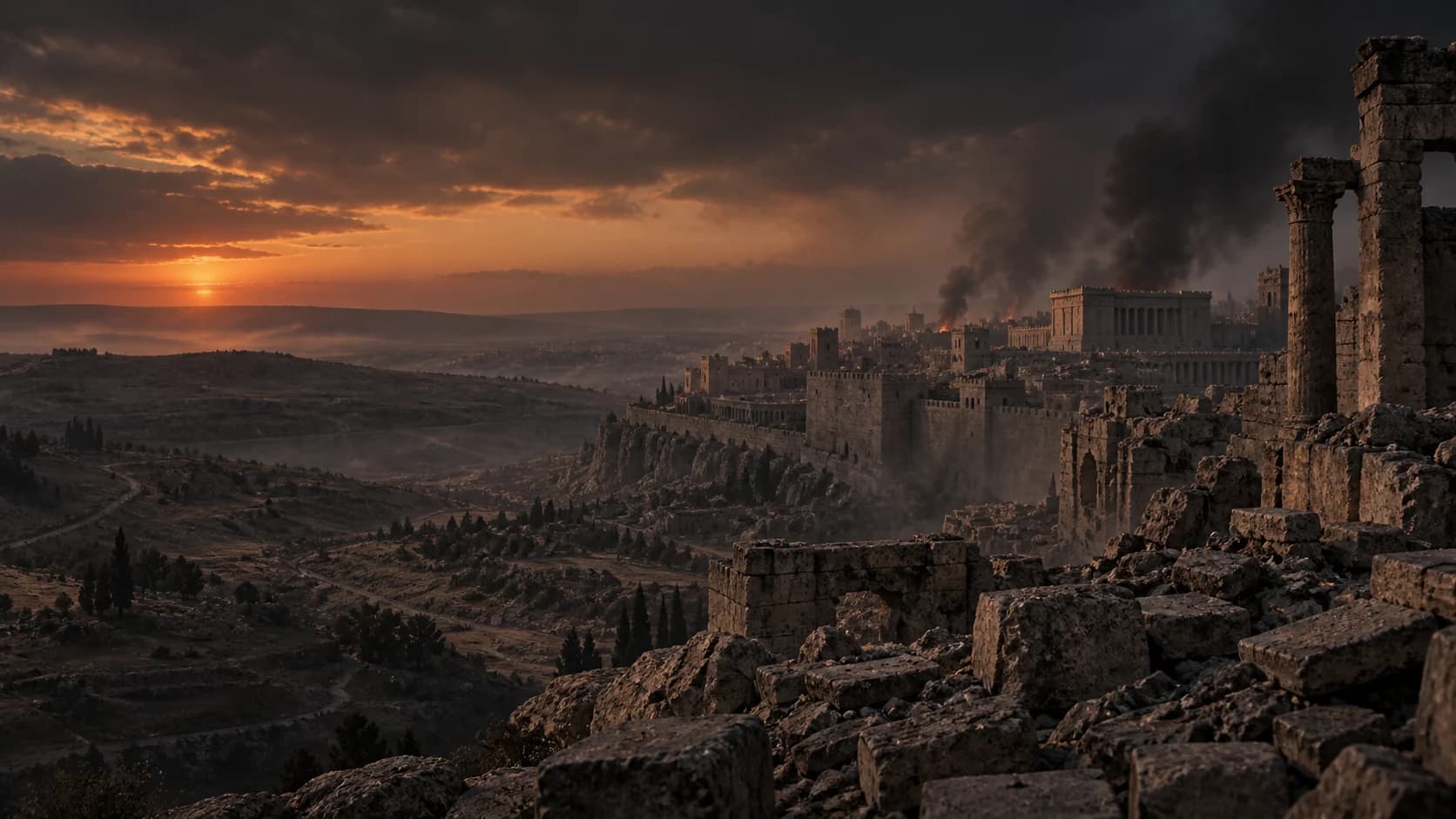
Preterism interprets biblical prophecy primarily as events fulfilled in the past, especially in the Jewish war and destruction of Jerusalem in AD 70. Full or consistent preterism extends that claim to the Second Coming, resurrection, and final judgment, redefining them as covenantal, spiritual, or corporate events rather than future public acts of God.
Not everyone called a preterist makes those claims. Partial preterists usually affirm a future bodily return of Christ, resurrection of the dead, and final judgment while applying portions of or Revelation to the first century. This examination targets the form that declares those central events completed. Every interpretation must still account for the whole prophetic sequence.
Jesus distinguished Jerusalem’s fall from the end
In the disciples asked about the destruction of the temple, the sign of Christ’s coming, and the end of the age. Jesus warned of wars, famines, earthquakes, persecution, false prophets, worldwide proclamation of the gospel, the abomination of desolation, great tribulation, cosmic signs, His visible coming, and the gathering of His elect. The temple’s fall does not prove that every part of the answer occurred with it.
Jesus said the gospel of the kingdom would be preached in all the world for a witness unto all nations, “and then shall the end come” (). After the tribulation, the sun and moon are darkened, the powers of heaven are shaken, all tribes mourn, and the Son of man appears with power and great glory. Those descriptions cannot be reduced to the Roman army entering Jerusalem without changing the scale and subjects of the prophecy.
Christ’s return will be personal and visible
says the same Jesus who ascended bodily and visibly will return in like manner. says He comes with clouds and every eye will see Him. Jesus compared His coming to lightning shining from east to west and expressly warned against reports that placed Him secretly in the desert or hidden chambers ().
“This same Jesus, which is taken up from you into heaven, shall so come in like manner as ye have seen him go into heaven.” —
The apostolic sequence was not completed in AD 70
connects the coming of the Lord and our gathering unto Him, then says that day will not come before the falling away and revelation of the man of sin. joins Christ’s descent from heaven with the resurrection of the dead in Christ and the gathering of living believers. describes the same event as an incorruptible bodily transformation at the last trumpet.
Paul treated the claim that the resurrection was already past as destructive error. Hymenaeus and Philetus “erred” by saying it had happened already and overthrew the faith of some (). A system that relocates the promised resurrection into an invisible first-century event repeats the substance of the error Paul condemned.
Revelation’s judgments exceed the fall of Jerusalem
Revelation describes authority over every kindred, tongue, and nation; an enforced mark controlling buying and selling; bowls of wrath; the Euphrates prepared for the kings of the east; the cities of the nations falling; every island fleeing; mountains disappearing; and the armies of the earth gathered against the returning Christ. The beast and false prophet are then cast alive into the lake of fire (, 16, and 19).
The Roman siege of Jerusalem did not fulfill that chain. It did not impose the mark upon all nations, move every island and mountain, end with the visible descent of Jesus, destroy the beast at His appearing, or raise the faithful dead to reign with Christ. Local events may foreshadow final judgment, but a shadow is not the completion of everything prophesied.
The resurrection and promised kingdom remain ahead
places the resurrection after an unparalleled time of trouble. places the first resurrection after the beast’s persecution and identifies those raised as saints who refused his worship and mark. The rest of the dead rise after the thousand years. This order cannot be reconciled with a completed resurrection in AD 70.
The prophets also describe conditions never established after Jerusalem fell. Nations have not ceased war or beaten their weapons into instruments of peace, and the earth has not become full of the knowledge of the Lord as the waters cover the sea (; ). Christ’s kingdom is certain, but its promised public conditions cannot be replaced with an undocumented spiritual fulfillment.
Time statements do not cancel unfulfilled events
Preterists appeal to words such as “near,” “shortly,” and “this generation.” Those texts must be taken seriously, but they must also be interpreted with passages that describe delay and warn against measuring God’s promise by human impatience. Jesus spoke of a bridegroom who tarried and a lord who returned “after a long time” (;25:19). Peter answered scoffers by teaching that the Lord is not slack concerning His promise and that the day of the Lord will yet bring cosmic judgment and a new heavens and new earth ().
No difficult time statement authorizes an interpretation that dissolves the bodily resurrection, visible return, and universal judgment taught plainly elsewhere. Scripture must interpret Scripture, and every proposed fulfillment must satisfy the events the text actually names.
Why this error is dangerous
Full preterism removes the church’s future hope by declaring the appearing of Christ and resurrection of His people complete. It can also silence warnings about the man of sin, mark of the beast, persecution, and endurance by placing them safely in the past. Believers are then taught not to watch for or prepare to withstand events Jesus commanded His servants to understand.
The biblical response is neither date-setting nor speculative fear. It is sober readiness. Jesus will return openly; the dead will rise; the faithful living will be changed; the beast will be destroyed; judgment will follow; and God will make all things new. The church must hold that order fast, test every prophetic claim by the whole counsel of Scripture, and remain faithful unto the end.